Having become a term used by everyone, the term «cookie» has entered the Larousse dictionary, at least in its online version. But behind this word, of which we constantly see warnings or requests for authorisation, what is really hidden?
The invention of the cookie dates back to the 90s. With no advertising intentions at the time, cookies are text files generated by a website and saved onto your computer by the browser displaying the site, by executing its code.
A cookie for what?
When a «cookie» is placed on your computer, a string of valuable characters is written so that you can be identified as a visitor and linked to your browsing or preference information.
You prefer to read your favourite website in English; reading from the cookie will allow the website to store this information and offer you its display in English. All the data you may have left declaratively (by filling in a form, for example) or behaviourally (during your successive navigations) will allow the website to get to know you better and thus adapt your user experience.
Yes, but then where's the problem, you'll say, and why so much fuss about a text file that's supposed to optimise your user experience?
First-party cookie vs third-party cookie“
The cookies stored on your device during your browsing are not all generated by the site; they may also be generated by third-party tools or services used by it.
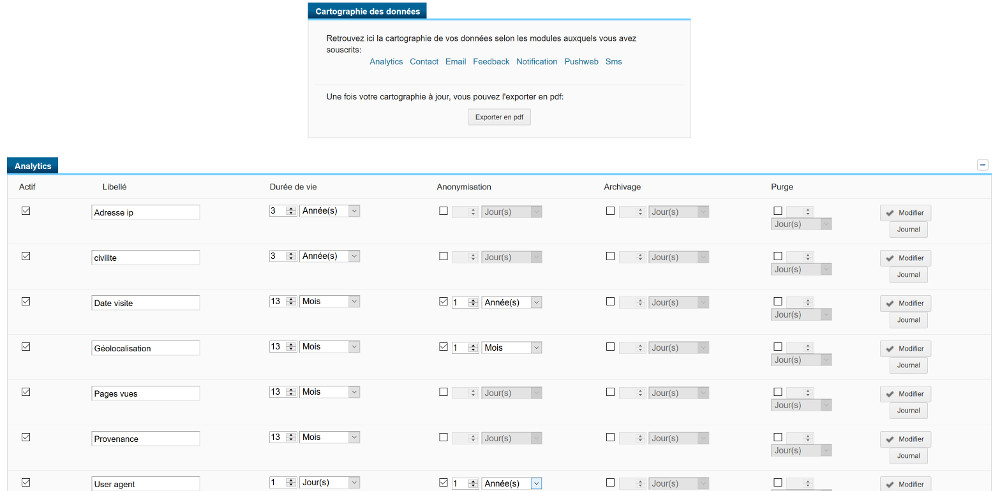
Certain services place cookies to allow for more detailed analysis of user behaviour or to optimise the display of a page with a service that is accessible only by and for the site (this is the case for a Marketing Automation solution including an Analytics module like SmartProfile).
Other services do this for advanced advertising targeting purposes, for example, by pooling data collected from different sites you have visited using the same service and the same cookie, which can be read regardless of the site viewed. This is the case with advertising networks that pool data collected during your browsing and thus allow you to be shown content viewed on your favourite e-commerce site when you are browsing your favourite news site.
Two technologies can thus be used depending on the desired purposes
- First-party cookie storage:
These cookies are placed on behalf of the domain you are browsing. They can only be read within the scope of your navigation on the site and in no case can they be shared with other sites.
- Third-party cookie deposition«
These cookies are placed on behalf of the service that the site uses when you browse. This service may read them when you visit other sites that use the same service, thereby pooling information about your behaviour.
And that's precisely where the problem lies, with users' ability to know what information is collected, pooled, reprocessed, and exploited, often without them even realising it.
Pooling data right under the internet user's nose, is that really a problem?
Yes, since a certain 25 May 2018 and the implementation of GDPR Who came to strengthen the requirements regarding consent, particularly for the writing or reading of cookies, the terms of which were already governed by the directive « ePrivacy ».
So, if we had to pick three good reasons to do without «third-party» cookies, they could be these:
1° The «accuracy» of the data collected
Aside from the outcry from authorities, the phasing out of third-party cookies does not have unanimous support among browser companies. Whether it's the Mozilla Foundation with Firefox, Google with Chrome, Microsoft with Edge, or Apple with Safari, all have signed the death warrant for this technology in the more or less short term.
Tools and services using «third party» cookies are therefore destined to offer increasingly incomplete data and thus a reduced quality of service.
Indeed, by preventing cookies from being placed on a computer, browsers deprive websites or services of the ability to identify a user over time and thus to associate information about their behaviour or preferences for a period beyond their visit. Identifying a visitor, i.e. a computer used by the same user, becomes very random without the use of cookies (unless technologies like «fingerprinting» are used, for example).
2. Third-party cookies: a matter of transparency
The emergence of banners for managing consent for cookie deployment has brought greater transparency for internet users, but often the use of data by these third-party services is not necessarily known by the sites themselves.
A single line of explanation or the name of a third-party service does not simply and effectively inform a user about what data will be collected during their browsing and for what purpose.
It is essential for digital players not to break the trust that has been so difficult to build over 20 years, and to that end, it is best to be transparent about the services used and the data collected.
Perhaps even better, why not do without certain services or not accept yet another cookie at the request of a supplier to track campaign performance with a black box, without really knowing what solution is behind the deposited cookie, where the data is collected, and the real purpose of its collection?
If it's free, ...
The adage that in B2C, when a service or offer is free, the consumer is the product, is just as true for B2B players.
In this case, the adage would become: «If it's free, then you and your data are the product!»
And that is precisely the problem and certainly the main reason for this resolution. Is it reasonable to leave large amounts of data about your clients with third-party companies that will reprocess it for a purpose that is not always clearly stated? Even if the gain from the service offered is quite clear in the short term, is it truly clear in the long term?
Your competitors thank you
Implementing pixels when deploying «social ads» campaigns allows you to track your customers' interest in your products. Thanks to this mechanism, you can retarget them on their favourite social networks and increase your sales... but your competitors can do so too, and thanks to you...
Go «cookieless»
Regain control of the security and usage of your customer data.
Choose trusted partners who use «first-party» cookies.
Choose partners who comply with current laws and regulations.
Choose responsible partners allowing you to access this data at any time to send it to your clients, modify it, or delete it at their request.
Ces partenaires existent et sont souvent « made in France » ;)