
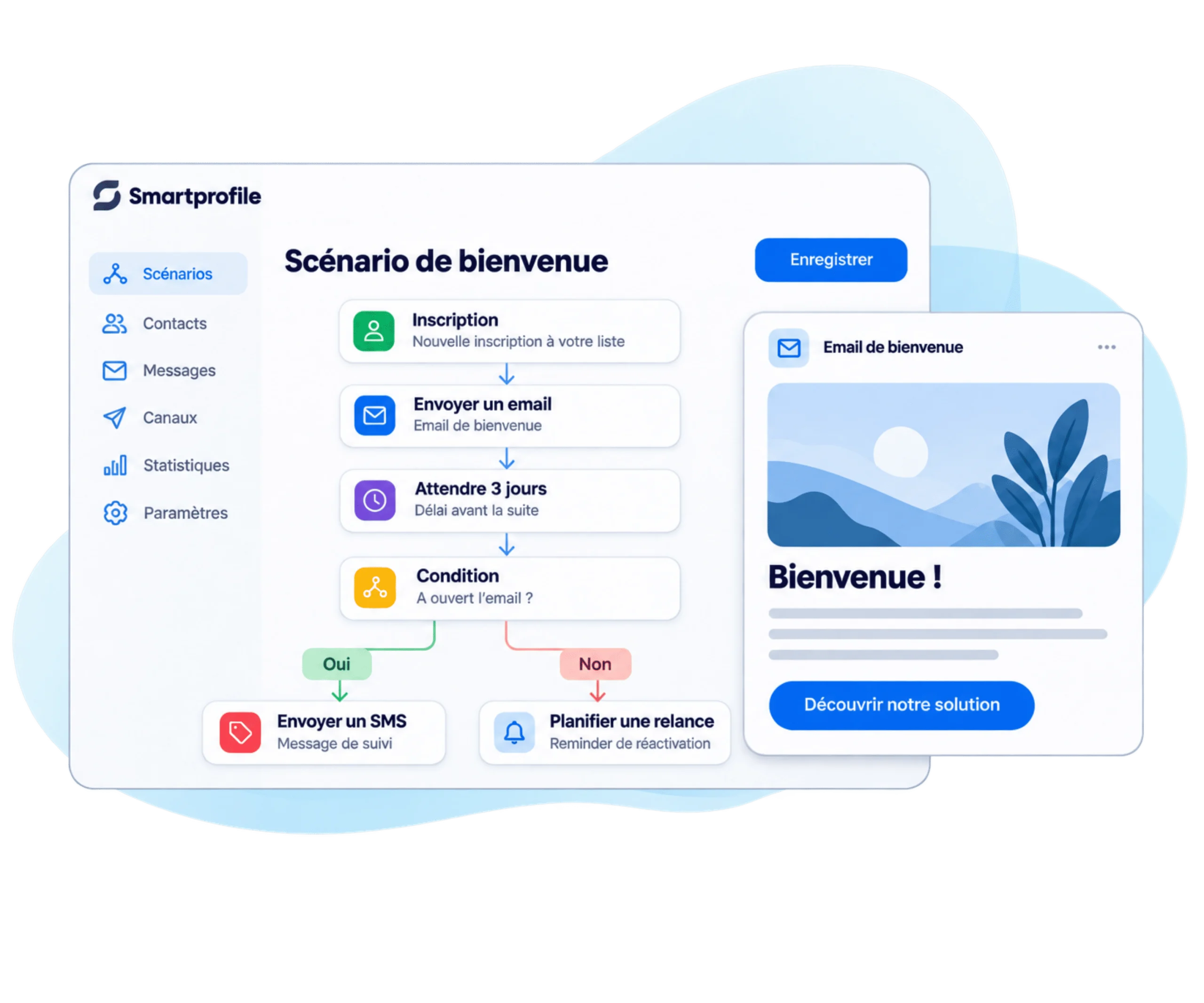
What is marketing automation?
Marketing automation organises marketing actions into scenarios triggered by data or events. A sign-up, a visit or an interaction can move a contact through a relevant journey. Teams define the conditions, messages, channels and timing, then analyse the results to improve the scenario.
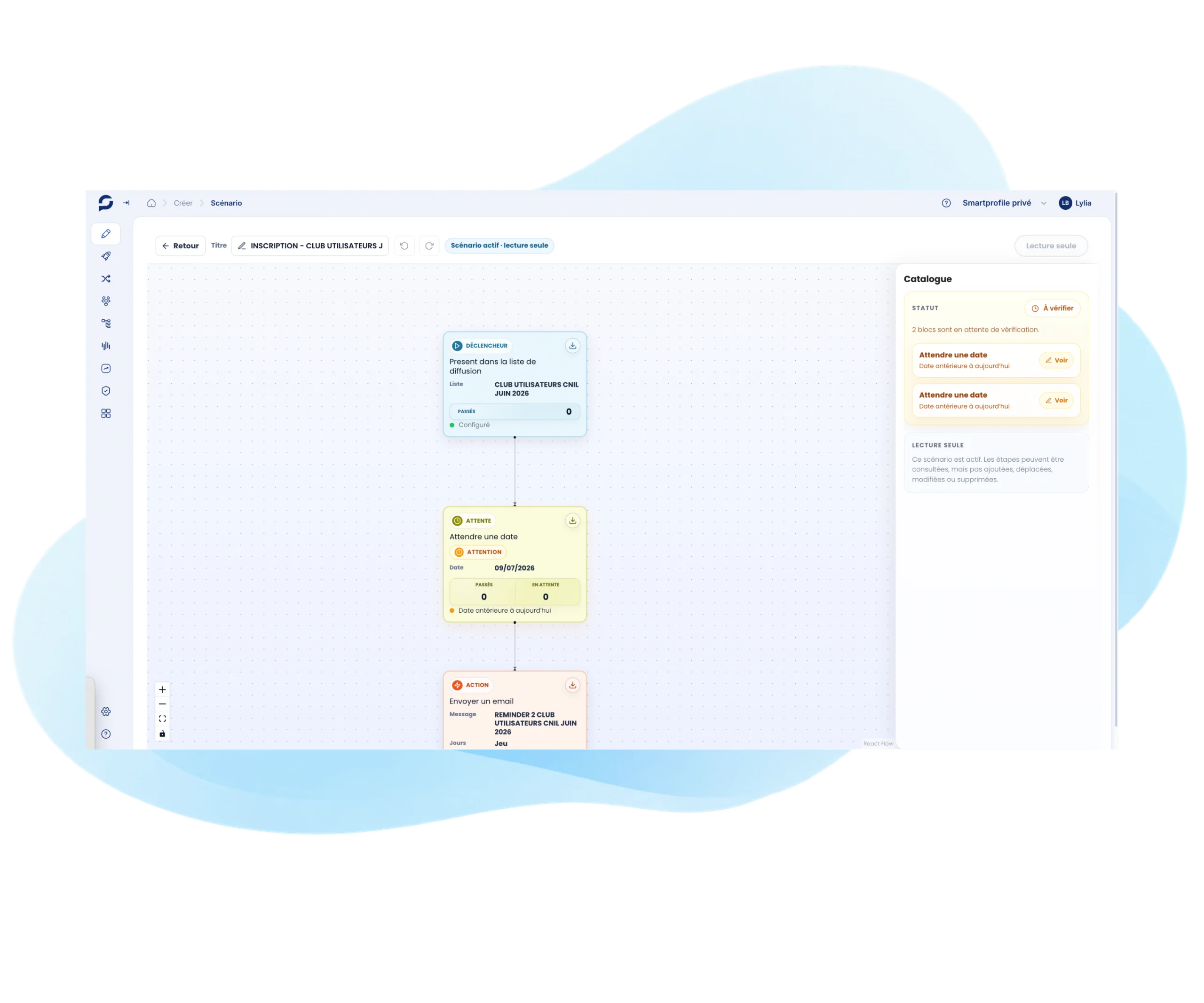
Scenarios triggered by customer data
Save time by automating your campaigns
Draw your relational marketing sequences and enable your cross channel scenarios based on your marketing strategy.
✓ Automate Your Marketing Campaigns
✓ Trigger Actions Based on Customer Behaviour
✓ Orchestrate Cross-Channel Communications
✓ Personalise Customer Journeys
Behavioural triggers
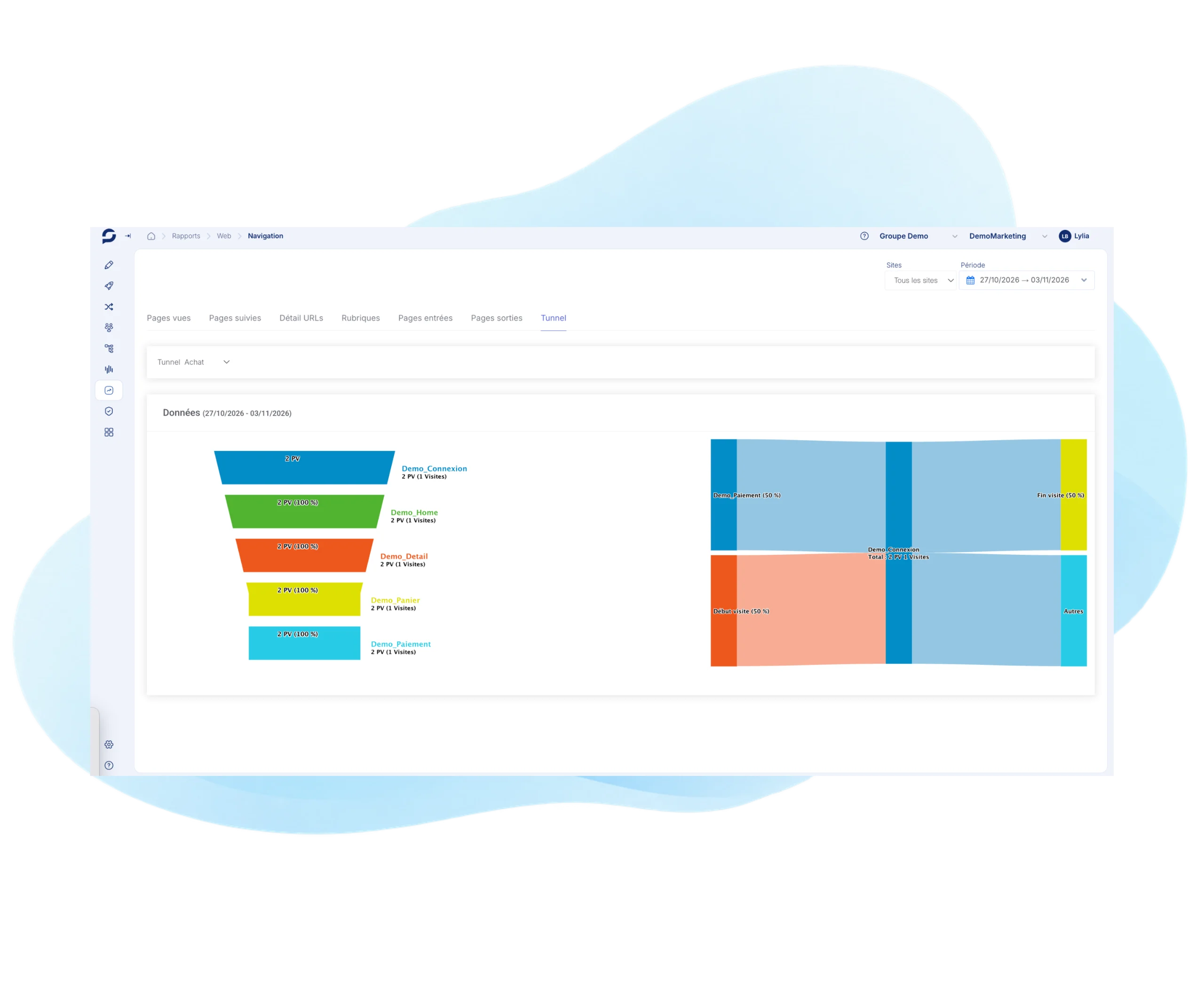
Collect data across the entire customer journey
By tracking your websites and mobile apps, or by integrating with the business data available within your IT ecosystem, you can leverage the data available at every stage of the customer journey.
✓ Track Customer Journeys Across Channels
✓ Analyse Browsing Behaviour
✓ Identify the friction points
✓ Optimise the experience at every stage
Business events
Data from your CRM, ERP and business tools complements browsing signals. It supports scenarios based on the information available in your information system.
A single customer repository for your scenarios
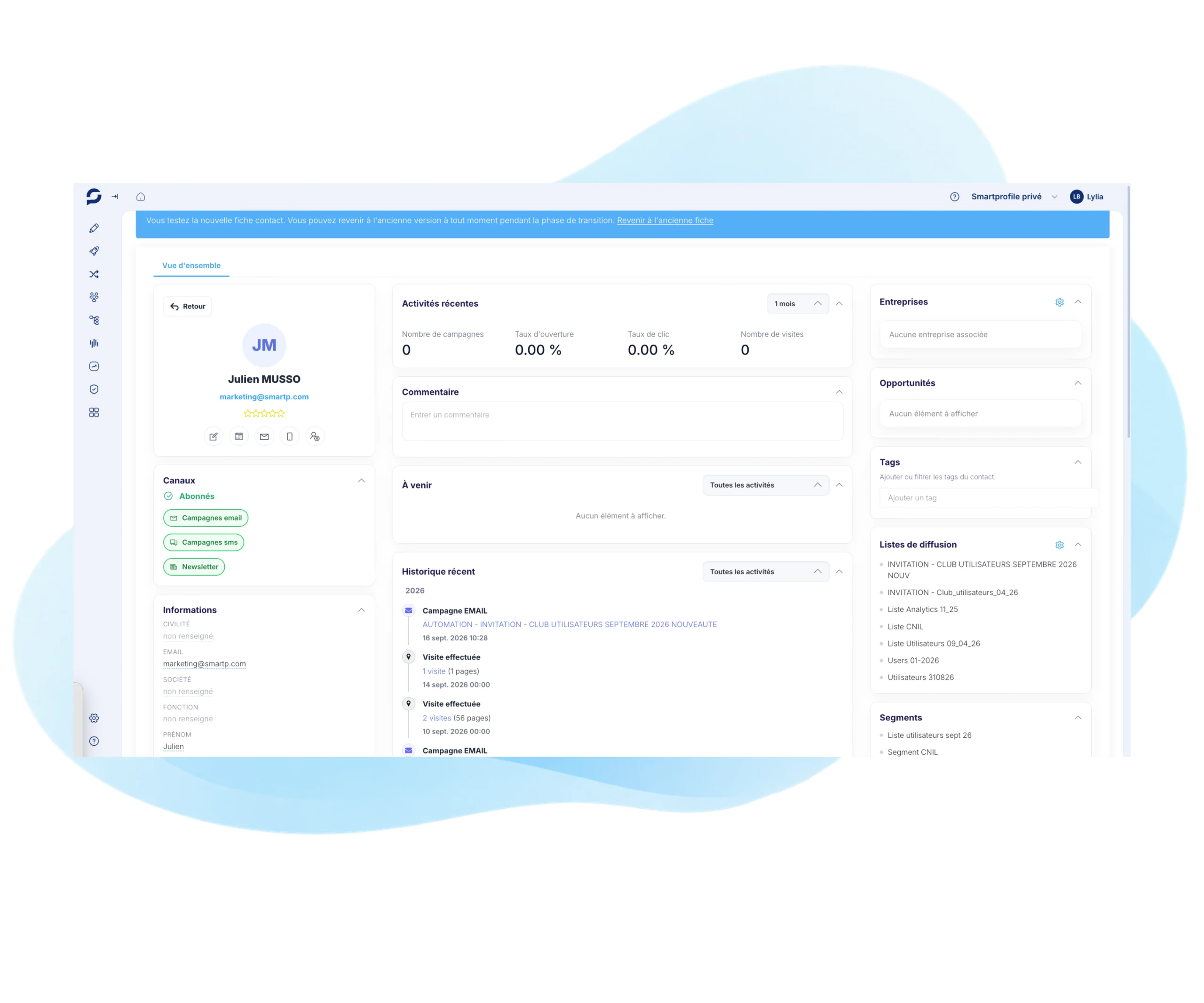
Get 360° vision
Consolidate all your data into a single customer repository (RCU) to know your customers and optimize your decision-making.
✓ Centralise All Your Customer Data
✓ Unify Profiles and Eliminate Duplicates
✓ View all customer interactions
✓ Gain Deeper Customer Insights
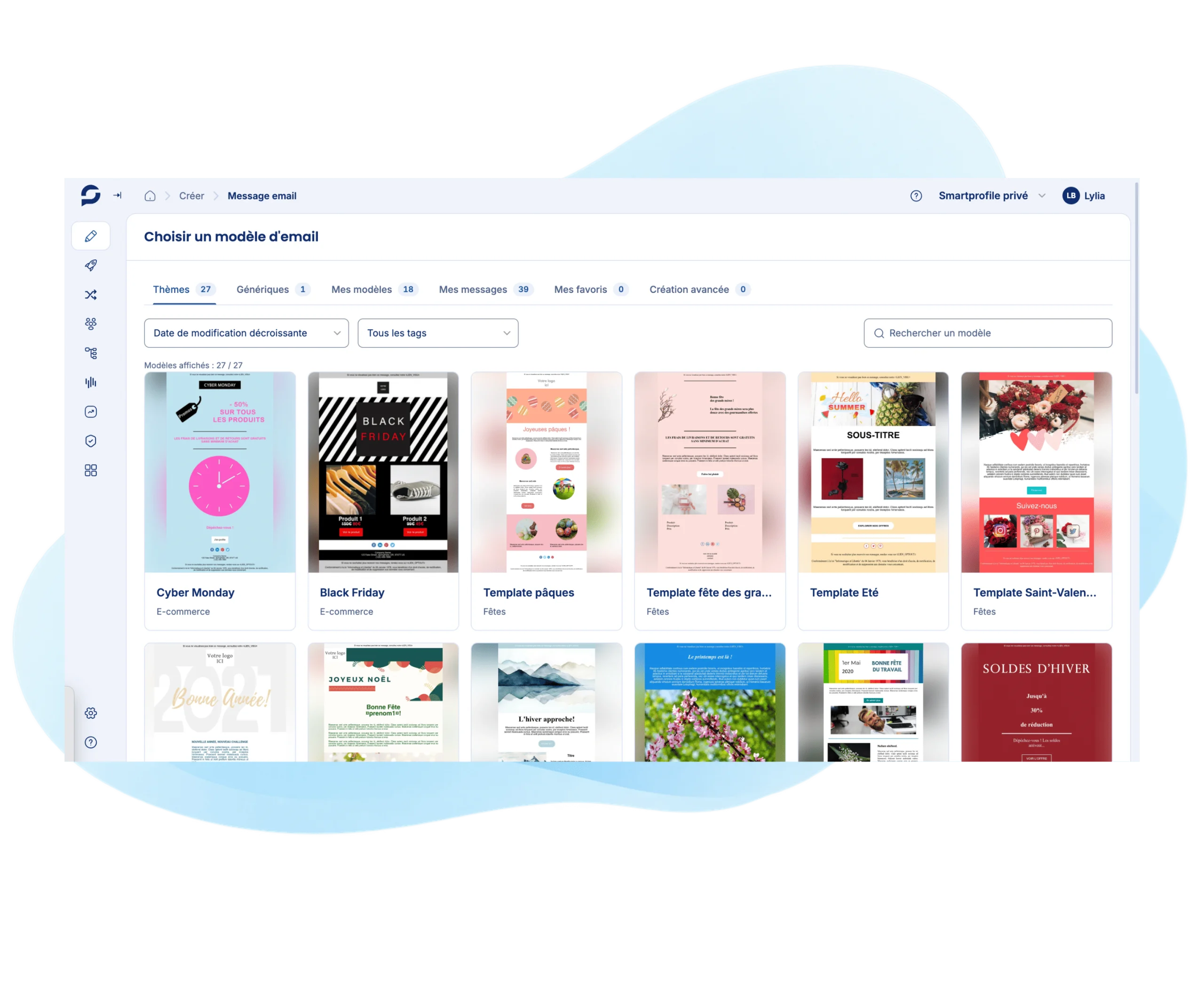
Every channel from one tool
Communicate with your contacts in real time on the right channel
Trigger personalised interactions based on your contact’s profile: message, channel, timing… Use an all-in-one cross-channel solution to create and distribute your marketing assets: email, SMS, landing pages, surveys, push notifications and alerts…
✓ Personalise Messages in Real Time
✓ Reach Customers on the Right Channel
✓ Trigger Interactions Based on Behaviour
✓ Engage Contacts at the Right Moment
Create and send emails in your marketing sequences, adapting messages to each contact’s profile and interactions.
SMS and push
Add SMS and push notifications to your journeys to coordinate communications across channels.
Landing pages and forms
Connect campaigns to landing pages and forms to collect the information needed to continue the relationship.
Profiling and scoring
Build Advanced Segments Using Your Customer Data
Make personae available to your marketing teams. Measure the commitment of your contacts. Detect the appetite for an offer. Identify your lead maturity...
✓ Segment Your Audiences Precisely
✓ Assess contact engagement
✓ Identify interest in your offers
✓ Identify High-Potential Leads
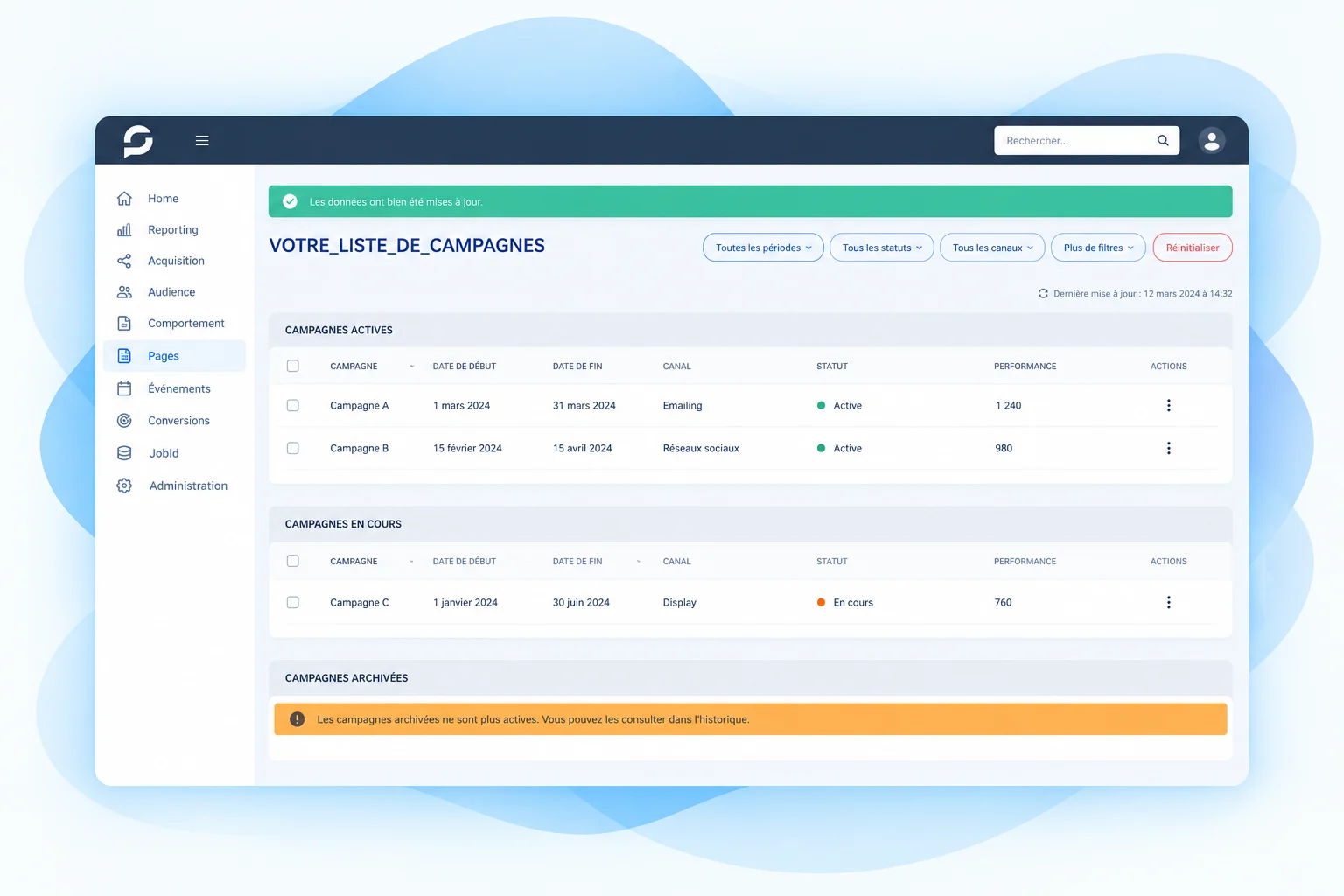
Measuring scenario performance
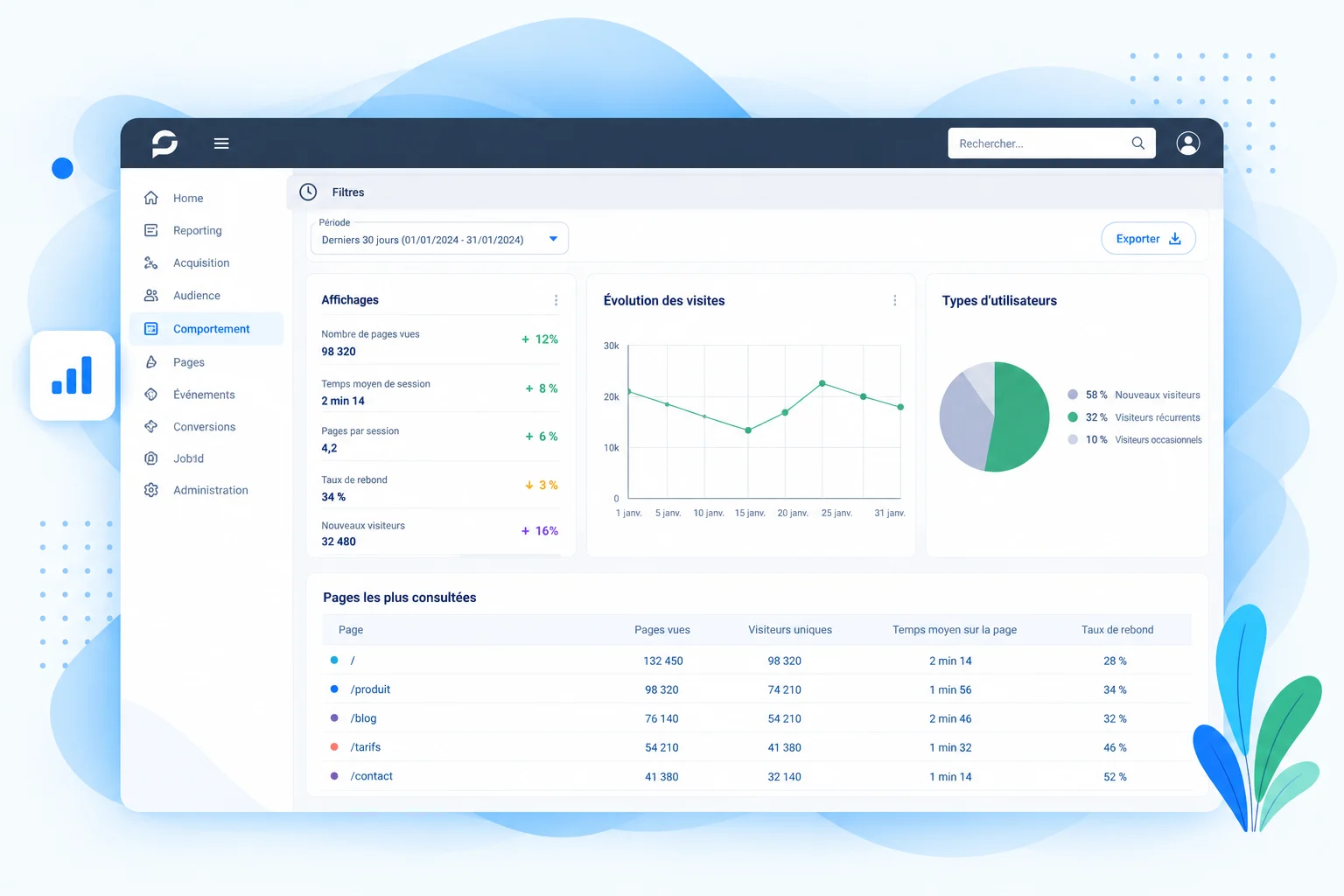
Turn your data into actionable business insight
Enrich your customer knowledge. Capitalize on all multi-channel interactions and behaviors. Power your CRM. Optimize the performance of your marketing actions...
✓ Analyse your marketing performance
✓ View your results in dashboards
✓ Identify trends and opportunities
✓ Optimise your campaigns with data
Which marketing automation scenarios should you implement?
Here are six example scenarios to help you choose an initial journey. Their implementation depends on the data, rules and channels selected for your project.
| Scenario | Trigger | Condition to check | Possible action | Metric |
|---|---|---|---|---|
| Welcome | Sign-up | Required information available | Present the next steps by email | First action completed |
| Prospect nurturing | Content request | Interest known and contact still relevant | Offer additional content | Qualified enquiries |
| Interest follow-up | Identified interaction | Signal usable for this purpose | Adapt the next message | Intended action completed |
| Reactivation | Period without interaction | Contact still usable for this purpose | Suggest resuming the relationship | Renewed contact |
| Due date | Date held in a business system | Situation still current | Send a relevant reminder | Completed processes |
| Post-action follow-up | Purchase or enquiry handled | Step completed and follow-up appropriate | Offer useful content | Continued journey |
For campaigns coordinated between head office and branches, see local and distributed marketing.
Illustrative example: follow up a B2B enquiry
A contact requests a document about an offer. The proposed scenario sends the document, then suggests a discussion if the contact remains relevant. Before this second action, the team checks, in particular, whether a sales enquiry has already been handled. Monitoring focuses on qualified discussions, not only email opens. The data, exit rules and their implementation must be validated during project scoping.
How should you choose a marketing automation solution?
Bring a real scenario to the demonstration and ask to walk through how it works from end to end:
- Data: can the source needed to trigger the scenario be connected?
- Targeting: can the required entry, exclusion and exit conditions be expressed?
- Channels: are the messages needed for the journey covered by the proposed offer?
- Timing: how should delays, follow-ups and messaging frequency be defined?
- Measurement: how can the scenario be connected to the intended action and available data?
- Governance: how can processing purposes and changes in the contact’s situation be taken into account?
- Operations: who builds, tests, monitors and updates the scenario?
Avoid choosing solely on the number of channels or the appearance of the builder. A simple scenario, supplied with usable data and monitored by an identified team, is a better starting point than a collection of journeys without a clear objective.
Marketing automation and GDPR
Scenarios use contact data, interactions and the rules defined for the project. Smartprofile’s GDPR module helps manage purposes, consent and the data lifecycle. Targeting, trigger and channel choices sit within this management framework.
How much does a marketing automation project cost?
The budget is prepared around the journeys to be implemented: contacts involved, channels, data sources, scenarios and support needs. Distinguish access to the solution, implementation work and the effort needed to produce, test and develop campaigns over time.
To compare proposals, ask for clarification of the selected modules, the volumes taken into account, integration services and each team’s responsibilities. Presenting an initial scenario with its data and metric makes it possible to discuss a concrete scope.
FAQ


Smartprofile Marketing Automation: cross-channel workflows triggered by unified customer data, enabling real-time engagement on the right channel.