
Local vs distributed marketing
Animate your network by mastering your brand experience
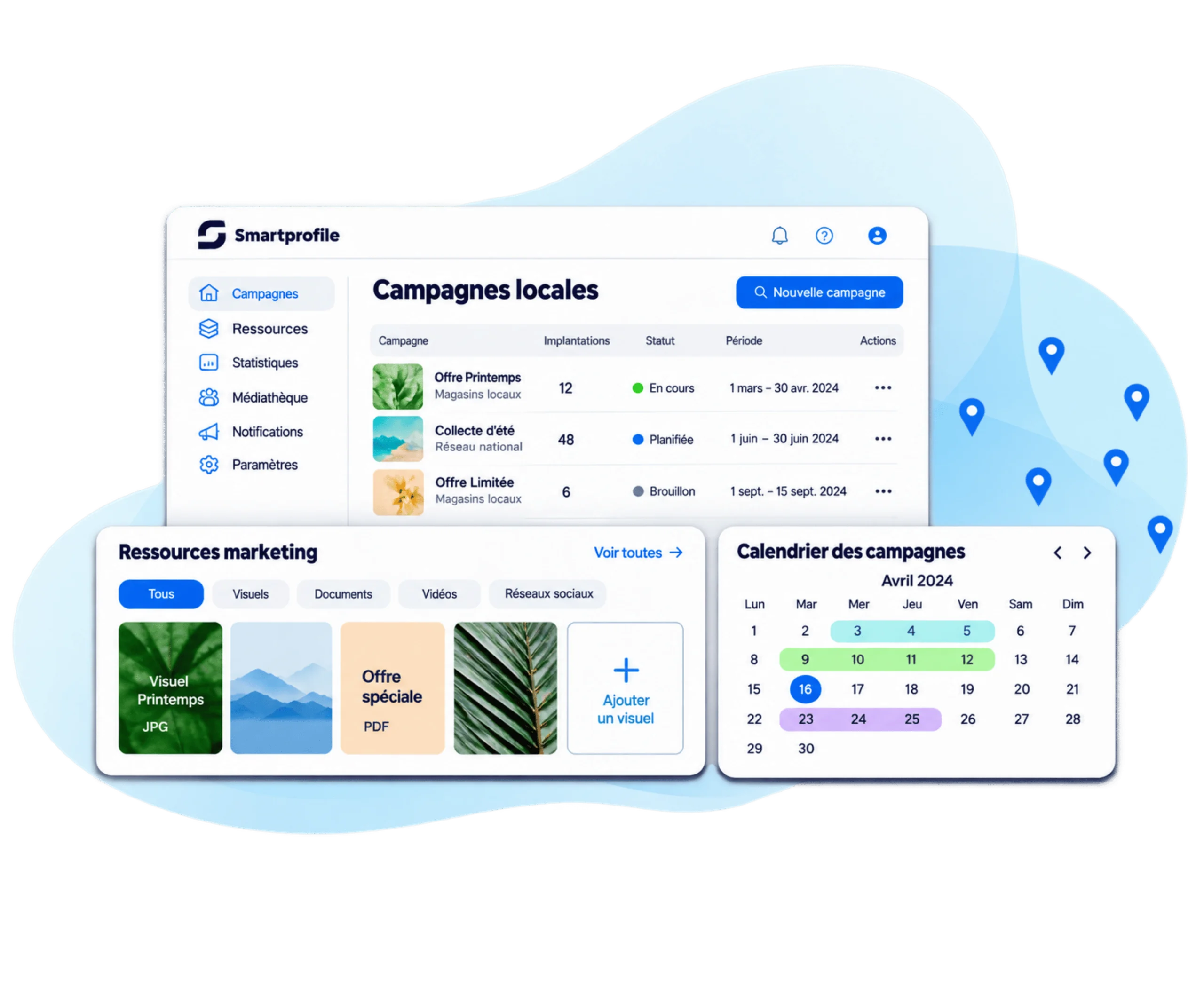
Local marketing adapts communications to customers in a particular area or establishment. Distributed marketing organises these communications across a network by coordinating the brand and local teams.
Speak locally with tools to manage campaigns and customer knowledge. Guide communication with the provision of media consistent with your brand.
✓ Coordinate Campaigns Across Your Network
✓ Empower Your Local Teams
✓ Share On-Brand Marketing Materials
✓ Tailor Messaging to Each Location’s Customers
Centralise brand assets
Manage your omnichannel marketing resources
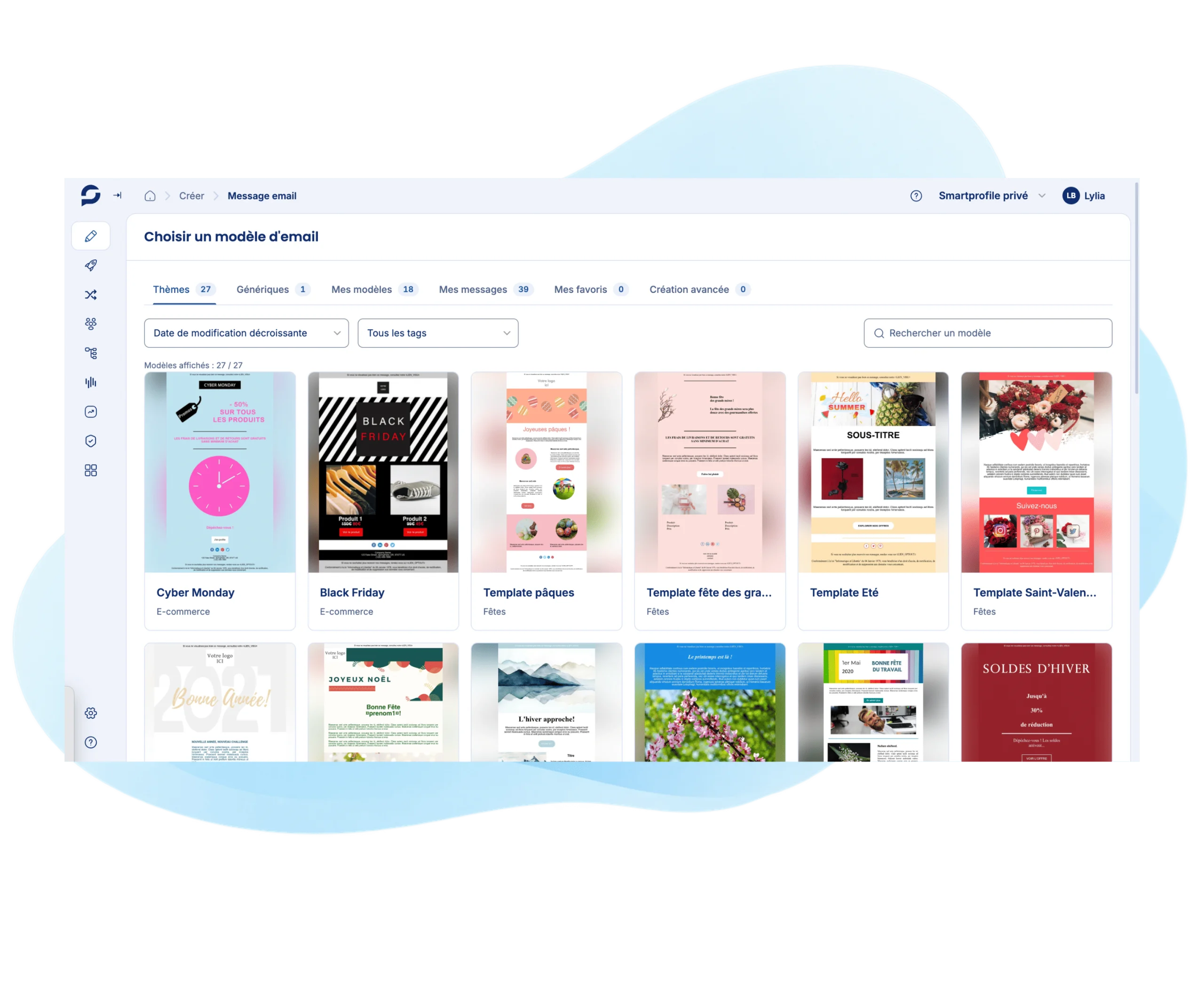
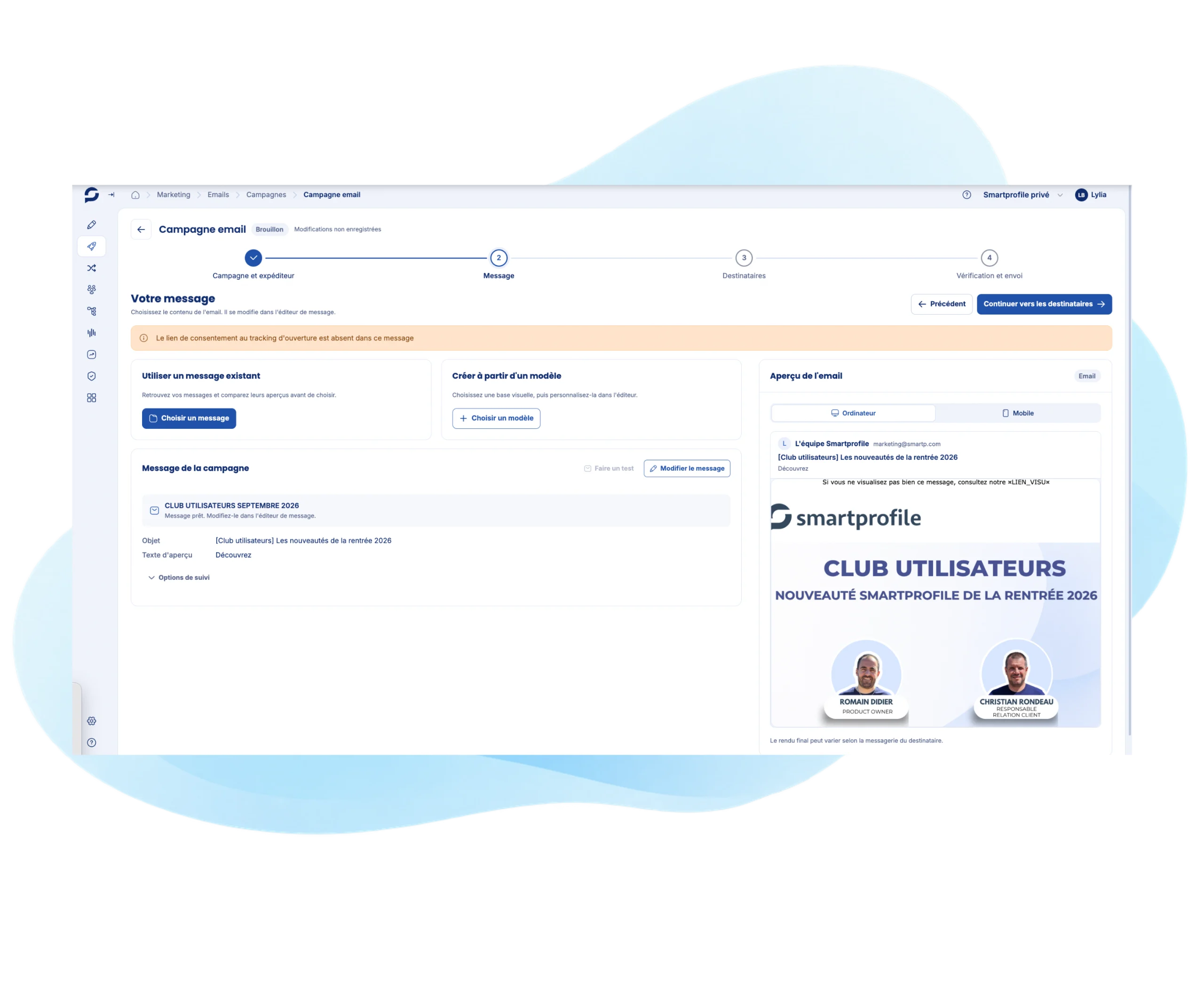
Email, SMS, landing page... Create and distribute your resources from builder or advanced creation (import of html code)
✓ Centralise Your Marketing Assets
✓ Create Emails, SMS Campaigns and Landing Pages
✓ Customise Assets with the Built-In Editor
✓ Import Your Own HTML Designs
Who prepares, approves and delivers campaigns?
Local autonomy needs to be defined in practical terms: which information can be adapted, which materials are shared and which activities require approval? Here is an example of an organisation to adapt to your network.
| Role | Prepares | Approves or coordinates | Delivers and monitors |
|---|---|---|---|
| Head office marketing | Materials and campaign framework | Shared message and brand guidelines | Results across the network |
| Network coordinator | Calendar and support | Consistency between national and local activities | Participation by locations |
| Local manager | Local information and adaptations | Accuracy of information about their location | Local activities and enquiries received |
| Agency or partner | Creative work assigned by the network | Steps specified in its assignment | Explicitly assigned activities |
A network can centralise campaigns, allow certain adaptations or delegate more to individual locations. The key is to define boundaries, responsibilities and monitoring. Present this organisation during the demonstration to check how it can be implemented in your configuration.
Plan and automate local campaigns
Plan your marketing campaigns
Calendar and A/B/C testing
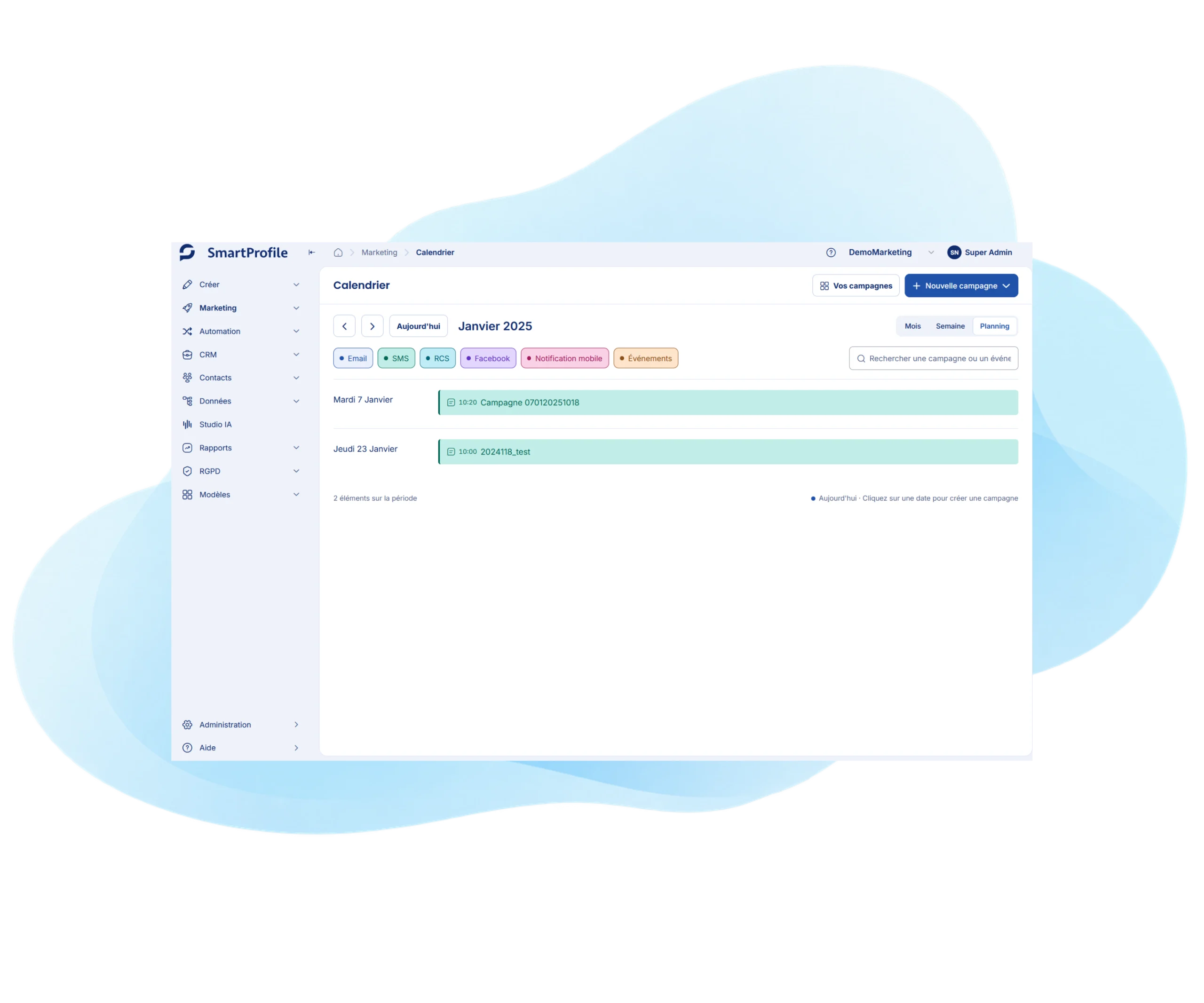
Plan your campaigns, follow-ups and multichannel activities. A/B/C tests let you compare different versions of your messages.
Event-based triggers
Trigger campaigns based on identified events: a birthday, the end of a subscription or a new offer.
✓ Plan Cross-Channel Campaigns
✓ Schedule Follow-Ups and Key Campaigns
✓ Test Different Message Variations
✓ Automate Messages Based on Customer Events
Route requests to the right person
Manage your business
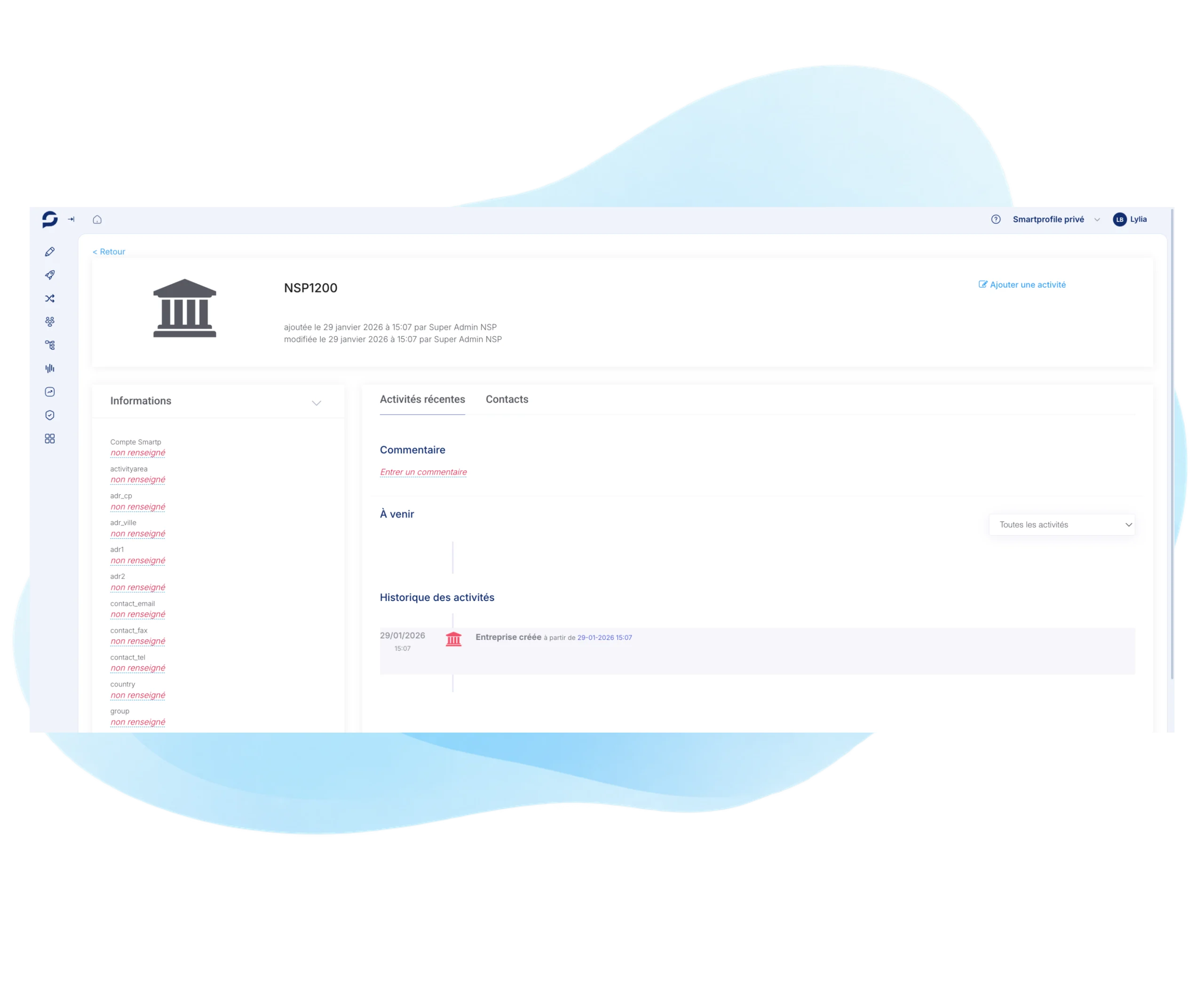
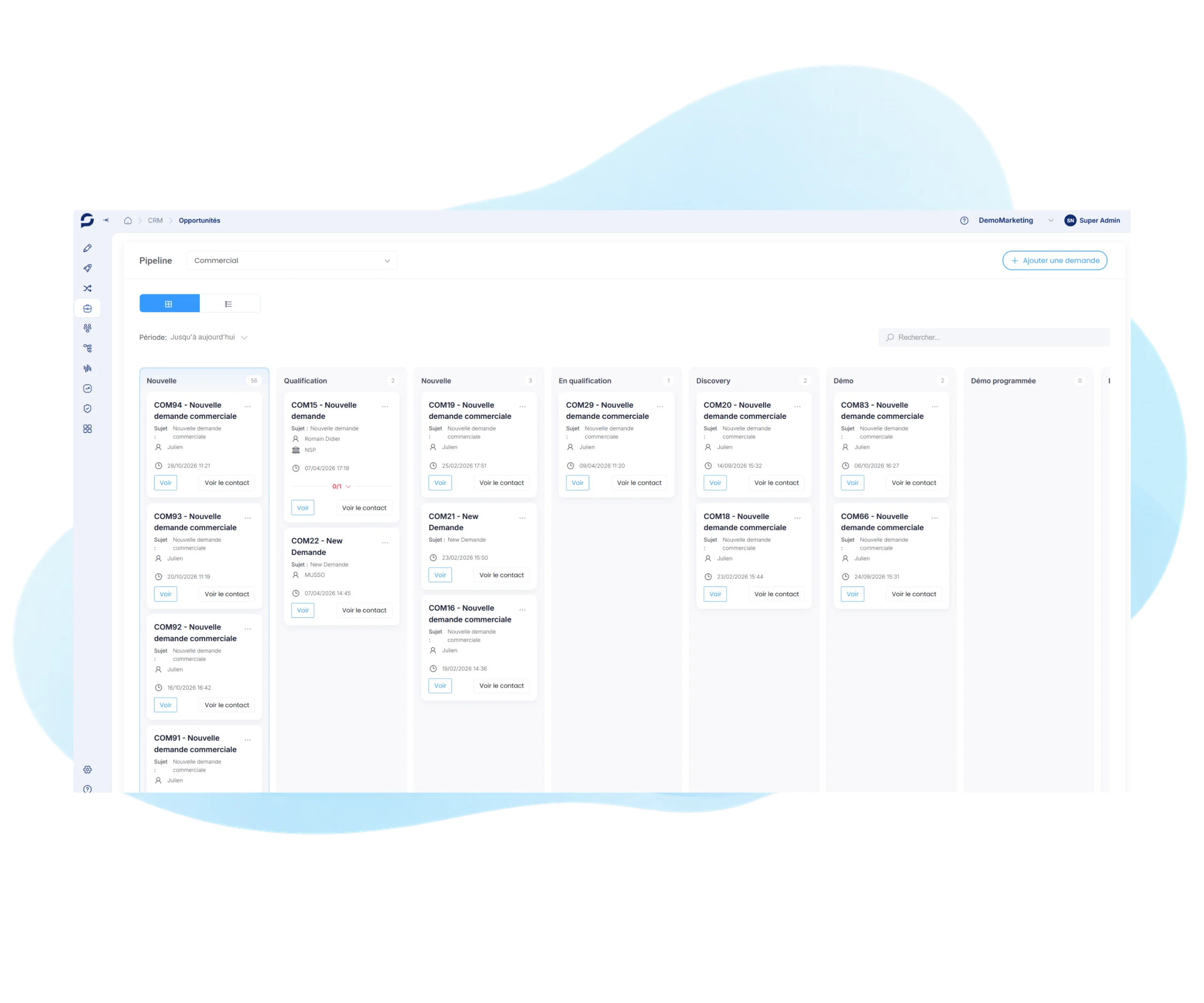
Manage booking requests, demo, contacts... all activities related to your business to react in real time to specific customer needs and send this information to the right service / collaborator
✓ Centralise Contact, Demo and Booking Requests
✓ Route Every Request to the Right Team Member
✓ Track Tasks and Requests
✓ Respond Quickly to Customer Needs
Prepare a usable directory of locations
The directory links activities to the right locations. Define a stable identifier, the location’s name, useful contact details, its position within the network and the person responsible for updates. Opening hours or the area served can supplement this information depending on the intended uses.
Before bringing data across, check:
- Which source is authoritative for each location?
- How will duplicates, openings and closures be identified?
- Who corrects inaccurate information?
- How will contacts and enquiries be assigned?
- What level of detail is needed to compare results?
Data input methods and assignment rules need to be specified as part of the project.
Reporting by branch and region
Get an overview of marketing activity
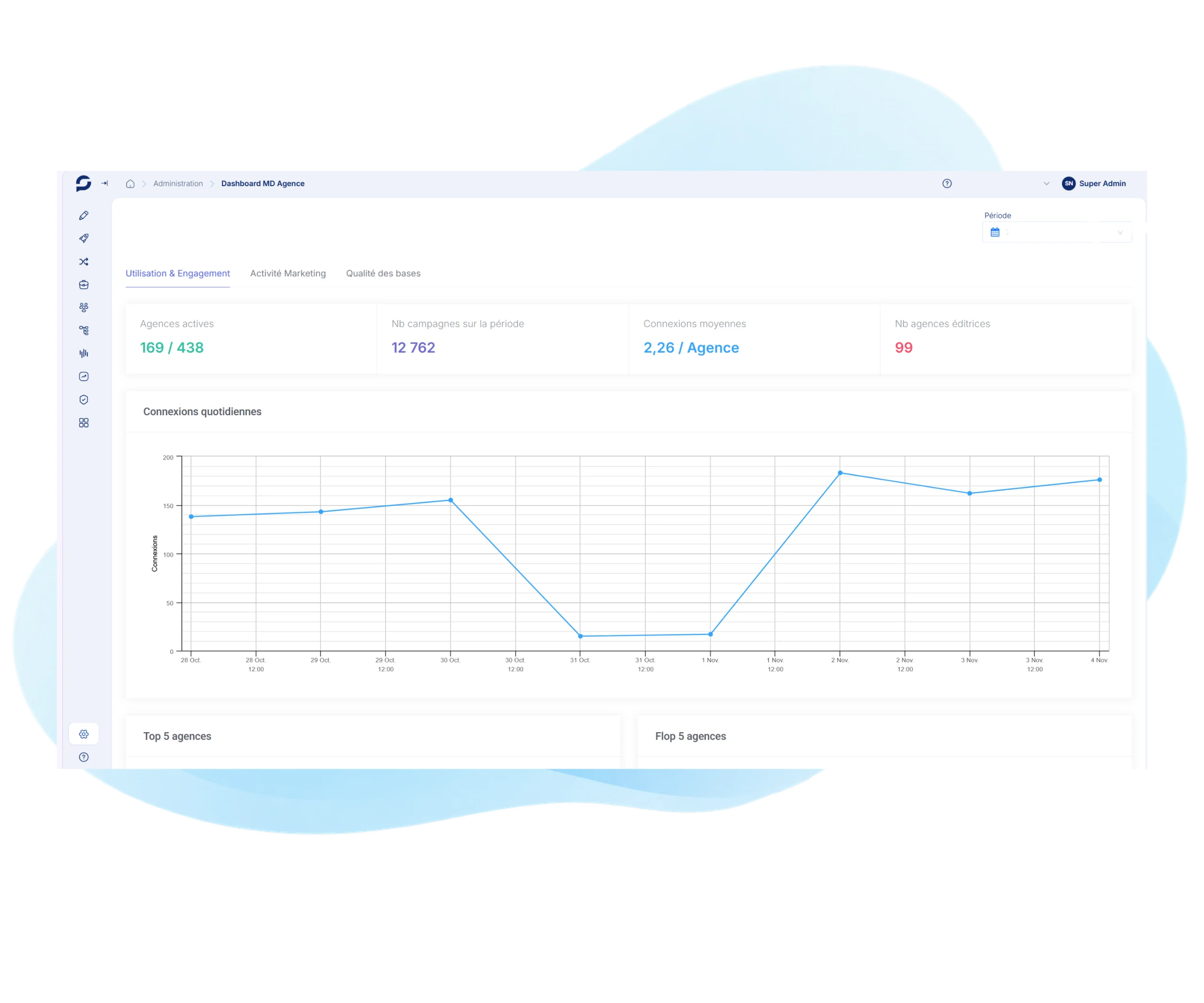
Access the reporting of your campaigns: opening rates, clicks, responsiveness, NPAI... And follow the marketing actions of your network: messages, interactions, number of contacts...
✓ Track opens, clicks and engagement
✓ Identify undeliverable email addresses
✓ Analyse your network’s marketing activity
✓ Compare results to optimise your next campaigns
Which networks?
Distributed marketing serves organisations that coordinate central communications and local teams: franchises, agency networks, distribution networks and public-sector organisations. The aim is to share brand assets, define local autonomy and monitor activity across the network.
Illustrative examples of local campaigns
Four campaign examples to organise cooperation between head office and local teams:
Franchising and distribution: roll out a shared campaign
Head office prepares the campaign materials; the network coordinator aligns the calendar; the local manager adapts the permitted information for their location. The shared element is the campaign, with a common message and identified local elements. Metrics to define: participation by locations and enquiries generated, over the same observation period.
Estate agencies: direct an enquiry to the relevant team
A local campaign may lead to a contact enquiry. The project specifies the information to collect, the rule for assigning it to an agency and the person responsible for follow-up. Head office and the network coordinator have a shared view of activity. A metric to track: the proportion of enquiries actually taken up.
Brokerage and insurance: coordinate communications
Head office prepares information and a framework for its distribution; local teams identify the relevant contacts within the authorised scope. The calendar must take account of activities already underway to prepare consistent communications. The central element is the campaign–contact pair. A metric to define: responses requiring local follow-up.
Training network: promote a local session
The central team provides shared material; the location adds the permitted information about a session and prepares its follow-up. The coordinator aligns the calendar across locations. The shared element is a campaign linked to a location and a period. Possible metrics: information requests and registrations, if these data are available.
Local data and GDPR: define responsibilities
Involve your DPO in project scoping to clarify responsibilities and permitted uses between head office, locations and service providers. In particular, describe who collects the information, who can access it and which communications it will be used for.
Also document how files circulate, retention rules and how individuals’ requests are handled. A change recorded locally must be incorporated into the network’s operating rules: specify how the relevant teams are informed.
The Smartprofile GDPR module presents the functions available to manage purposes, consent and the data lifecycle.
How much does a local and distributed marketing project cost?
To prepare an estimate, describe the locations involved, users, priority campaigns and data to bring across. Directory quality, integrations and support needs are among the factors to examine.
Distinguish access to the solution, implementation and team support in the proposal. Specify the responsibilities of head office, locations and the service provider, as well as the expected training scope.
An initial rollout scope can help test the organisation before extending it. Commercial terms, included services and any billing unit must be confirmed in the offer.
FAQ


Smartprofile Distributed Marketing enables brands to think globally and communicate locally, providing field teams with campaign tools while ensuring brand consistency.