
What is a Customer Data Platform?
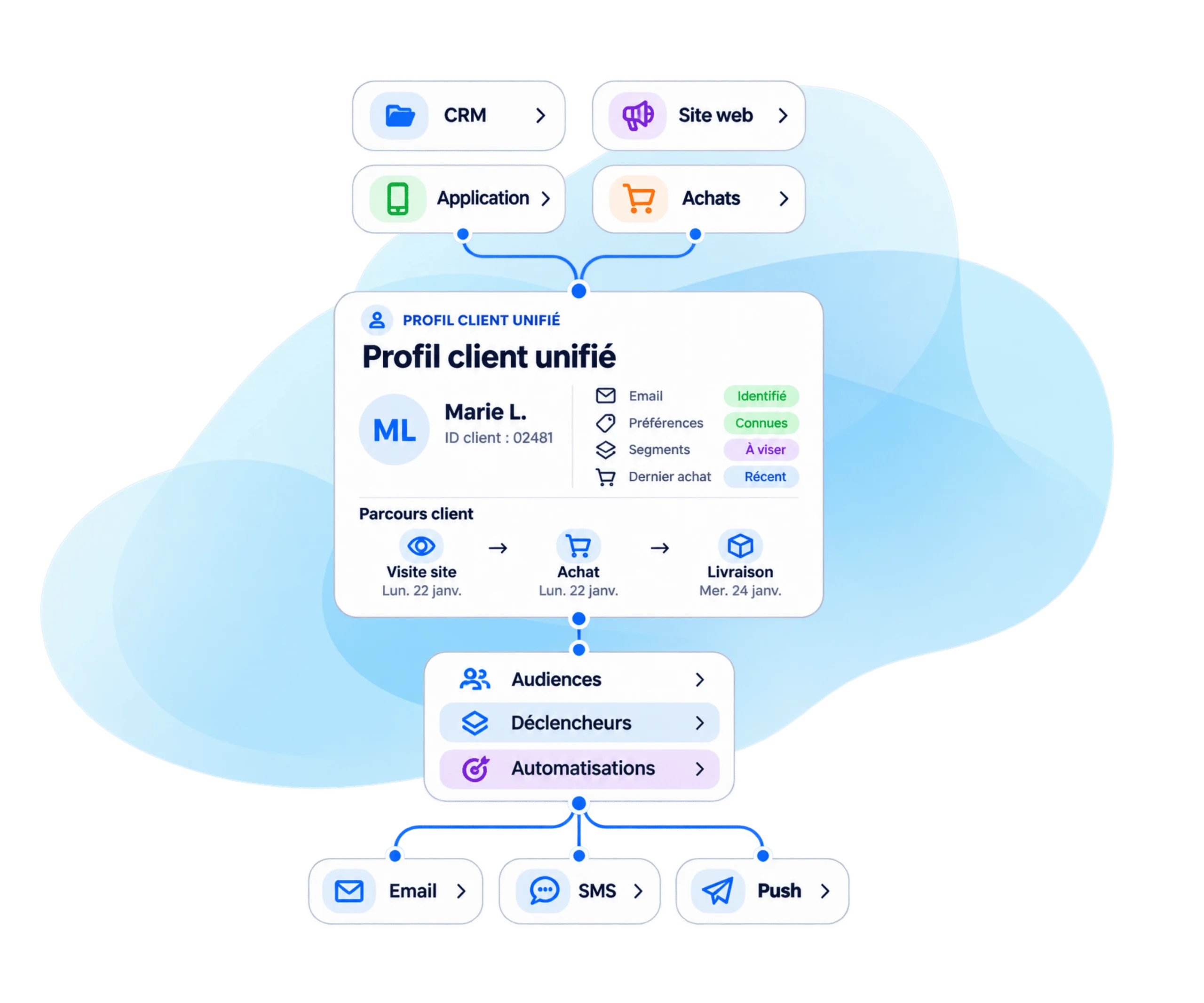
A Customer Data Platform, or CDP, brings together data from multiple sources to create a unified customer repository. It connects browsing data, information supplied by contacts and interactions recorded in business systems to build a clearer view of each contact. Teams can then create segments and use this information in their marketing activities. The CDP links data collection, preparation and activation. Its usefulness depends on the data model, the quality of the information and the governance rules defined for the project.
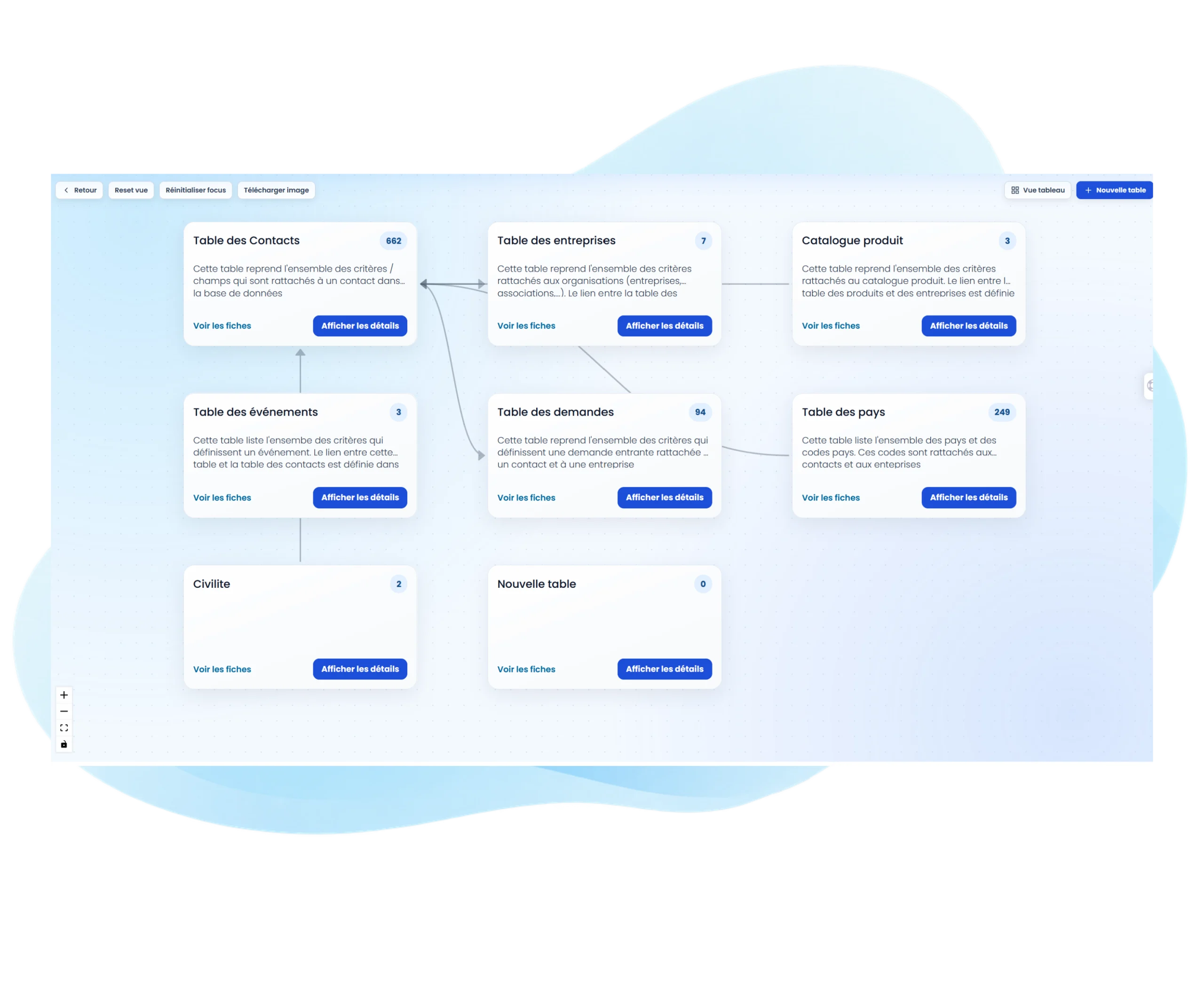
A single customer database fed by every source
Unlock the data in your ecosystem
Would you like to consolidate all your customer data from various sources? Our CDP allows you to consolidate and unify all your customer information to gain a deeper understanding of your audience.
✓ Bring Together Data from Every Source
✓ Unify Your Customer Information
✓ Build a Complete View of Your Audience
✓ Turn Trusted Data into Action
Native CRM, ERP and e-commerce connectors
Connectors link data from CRM, ERP and e-commerce tools to the customer repository. Customer information, transactions and baskets can then enrich customer knowledge.
APIs and webhooks
APIs and webhooks connect business tools and return CDP data to your ecosystem. The feeds to implement depend on the available sources and the project’s data model.
Advanced segmentation and scoring
Create relevant customer profiles
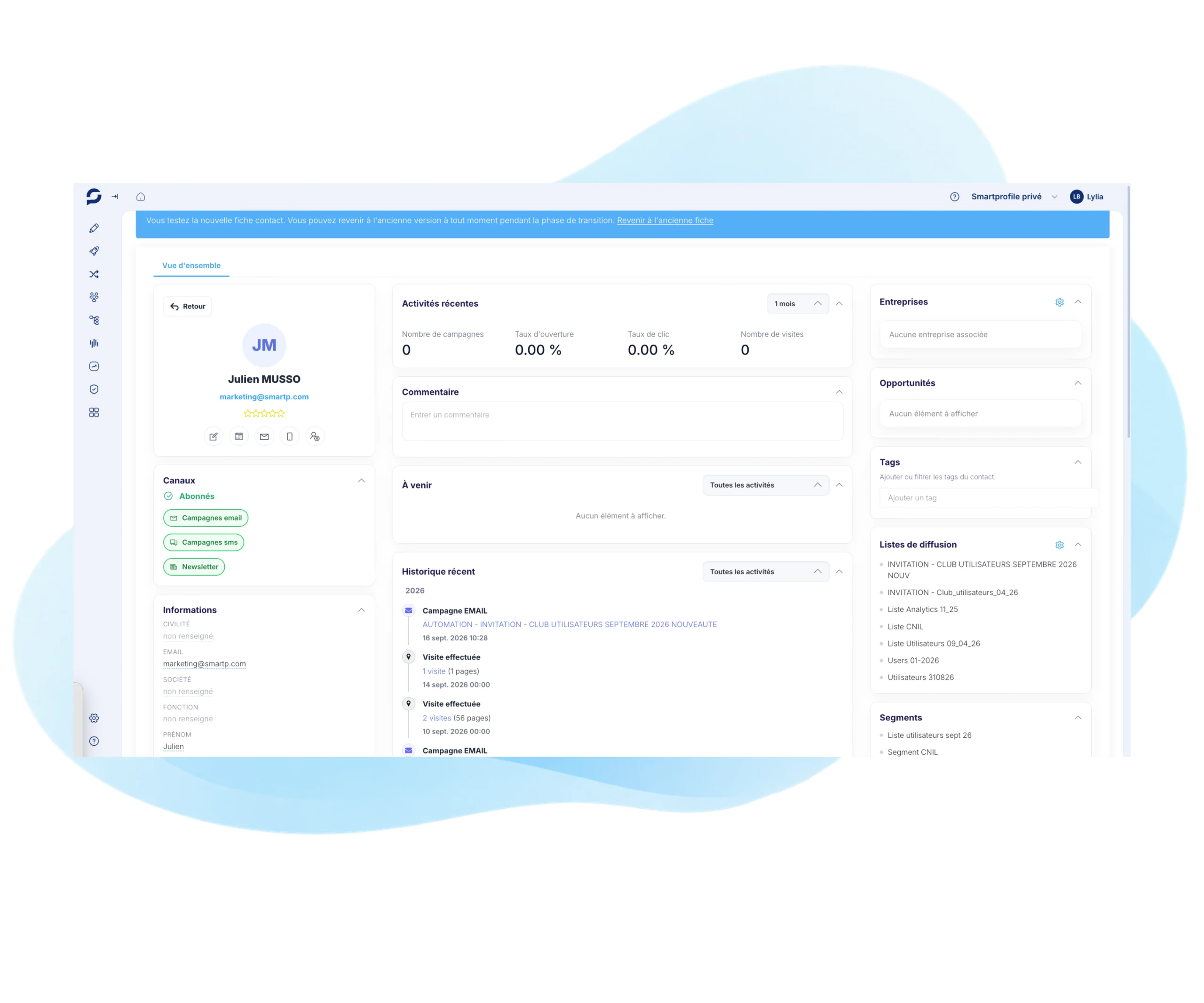
Want to identify groups of customers with similar behaviors? Create contact segments based on your entire dataset—either manually or using our AI algorithms.
✓ Build Meaningful Customer Segments
✓ Group Audiences by Behaviour
✓ Target Your Contacts More Precisely
✓ Fine-Tune Campaigns to Meet Your Goals
Rule-based segmentation
Build segments from the data available in your repository and the criteria relevant to your campaigns: behaviours, interactions or business information.
AI clustering and scoring
Smartprofile algorithms help group similar profiles and refine contact qualification. The resulting segments can then be used for targeting and personalisation.
Real-time activation
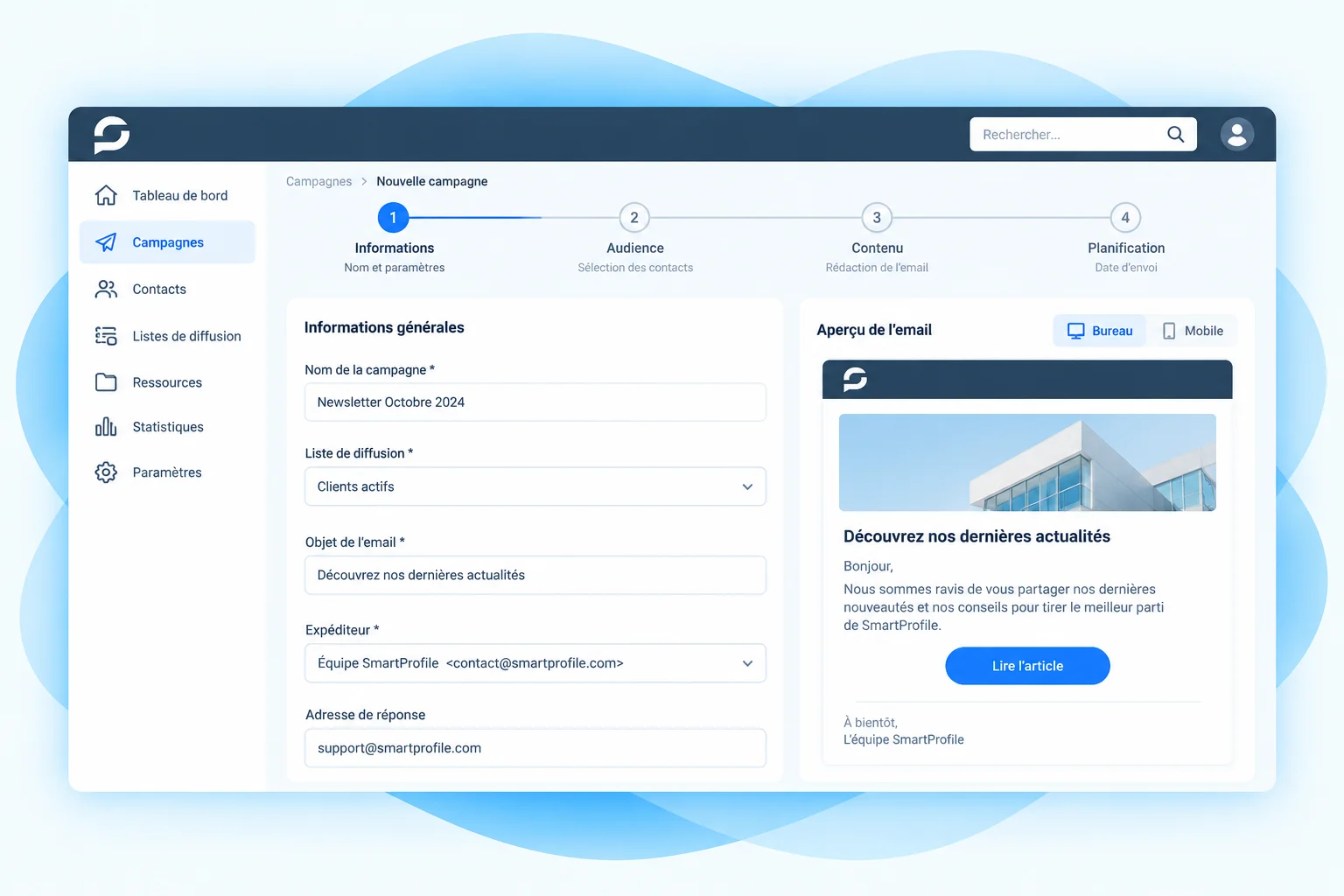
Offer personalized customer experiences
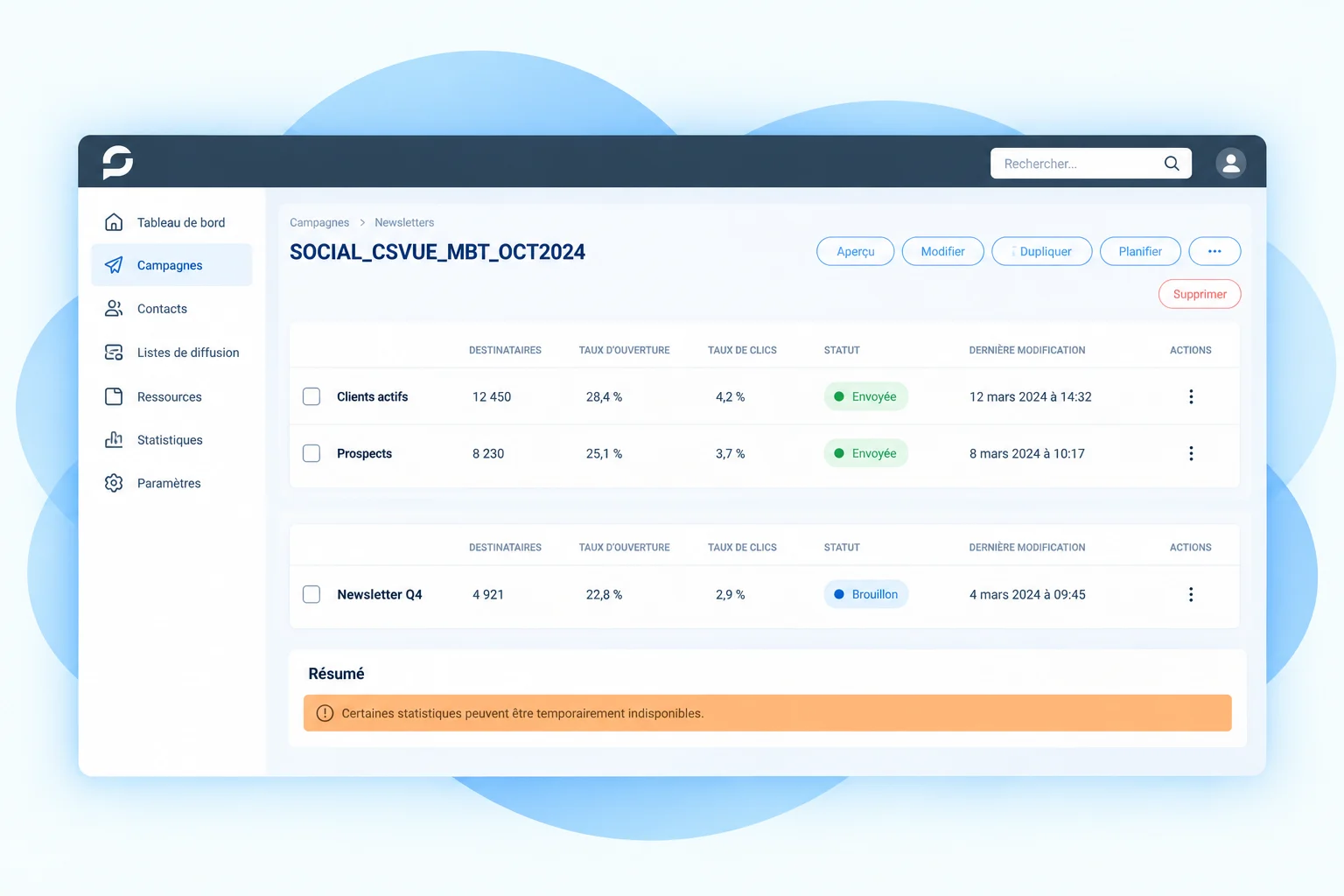
Are you struggling to deliver the right content to your different audiences? Our CDP helps you match each of your contacts with the right content at the right time, on the right channel.
✓ Personalise Content for Every Profile
✓ Deliver the Right Message at the Right Time
✓ Tailor Experiences to Every Channel
✓ Engage Every Contact with Relevance
Security, hosting and GDPR
Manage your data in a GDPR-compliant environment
Do you want to ensure that your data processing complies with the GDPR? Our CDP, hosted within the EU or in France depending on your requirements, allows you to guarantee the security and confidentiality of your data.
The GDPR module helps you stay compliant with various European and French laws.
✓ Ensure Compliant Data Processing
✓ Keep Customer Data Secure
✓ Choose Hosting That Meets Your Requirements
✓ Meet GDPR and Regulatory Requirements
What to check about your data sources
To prepare the project, start with a segment you would like to use and work back to the data it needs:
- Which system holds each piece of information?
- Which identifier can be used to match contacts?
- How frequently does the use case require the data to be updated?
- What rules should apply to duplicates and missing values?
- Which system will the segment need to be sent to?
La connectors and APIs page can help you prepare this discussion. Confirm the integration method and the scope of each data flow.
CDP vs CRM vs DMP
These categories serve different purposes and can complement one another. Their exact scope varies by solution and configuration.
| Tool | Primary role | Data used | Typical uses |
|---|---|---|---|
| Customer Data Platform | Unify customer knowledge across channels. | Web and mobile data, CRM data, transactions and marketing interactions. | Analysis, segmentation and audience activation. |
| Customer Relationship Management | Organise relationships and contact follow-up. | Contacts, accounts, exchanges and sales opportunities. | Sales follow-up and customer relationship management. |
| DMP | Build segments for advertising purposes. | Audience signals and media segments. | Advertising targeting and activation. |
What are the use cases for a Customer Data Platform?
These examples illustrate four possible projects, to be scoped around your organisation’s data sources and uses.
Insurance and brokerage: bring together the information needed to handle an enquiry
A web enquiry and the exchanges recorded in the CRM may remain separate. The project involves matching the form, the contact’s identity and the status of their enquiry. A segment can distinguish cases requiring more information from those already handled, before preparing an appropriate follow-up. A metric to define: the proportion of enquiries with the information needed for follow-up.
Retail and e-commerce: distinguish customers from new contacts
Campaign interactions and orders may be tracked in different systems. Matching them helps distinguish a new contact from a customer who has already made a purchase, then prepare appropriate communications. The initial work concerns identifiers and the availability of order data. A metric to track: the proportion of contacts linked to a usable history.
Branch networks: assign contacts to the right location
A network may want to connect its central database, contact data and branch directory. An initial segment could group contacts assigned to a location to prepare local communications. Assignment and sharing rules need to be defined. A data quality metric: the proportion of contacts without an identified location. Campaign organisation is then addressed through local and distributed marketing.
B2B services: connect expressed interest with sales follow-up
Content requests and sales exchanges may describe the same contact without being linked. Bringing this information together makes it possible to examine a segment of prospects interested in a topic and prepare a relevant action with the sales team. A metric to define: the proportion of qualified contacts actually followed up, using a shared definition of qualification.
How much does a Customer Data Platform project cost?
The estimate depends on the scope to be implemented: sources to connect, data to bring across, data quality processes, segments to build and systems to feed. A feature list alone is therefore not enough to compare two proposals.
To prepare your budget, distinguish between:
- access to the solution and the modules included in the proposal;
- integration and data preparation work;
- support, acceptance testing and team onboarding.
Also specify who will carry out this work. An initial estimate is best based on a priority use case, with its sources, users and tracking metric. Billing units and included services must be set out in the commercial proposal.


